
The OSI model divides network traffic into a number of layers.
Each layer is independent of the layers around it, and each builds on the services provided by the layer below while providing new services to the layer above.
It consists of seven layers, where each layer can be implemented in hardware (more common for lower layers) or software.
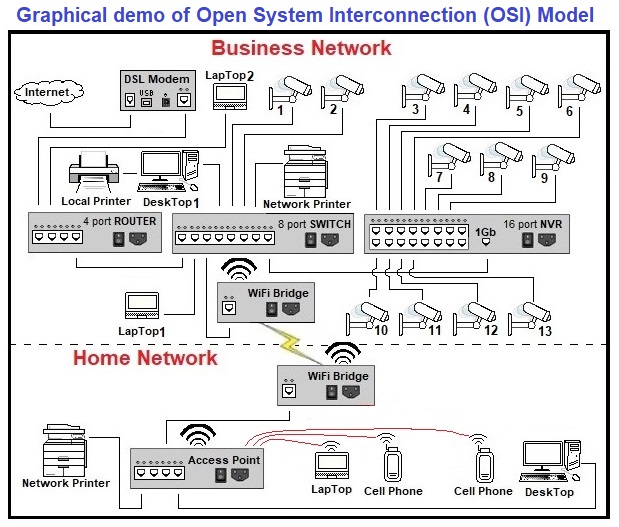
Layer 7 – APPLICATION
The Application Layer is the layer that most network users are exposed to, and is the level at which human communication happens.
HyperText Transfer Protocol (HTTP), File Transfer Protocol (FTP), and Simple Mail Transfer Protocol (SMTP) are all application layer protocols.
The human sits above this layer, interacting with the application.
Layer 6 - PRESENTATION
The Presentation Layer deals with data representation, before it reaches the application.
This would include Multipurpose Internet Mail Extensions (MIME) encoding, data compression, formatting checks, byte ordering, etc.
Layer 5 - SESSION
The Session Layer manages the logical communications session between applications.
Network Basic Input/Output System (NetBIOS) and Rate Control Protocol (RCP) are two examples of a layer five protocol.
Layer 4 - TRANSPORT
The Transport Layer provides a method of reaching a particular service on a given network node.
Examples of protocols that operate at this layer are Transmission Control Protocol (TCP) and User Datagram Protocol (UDP).
Some protocols at the transport layer (such as TCP) ensure that all of the data has arrived at the destination, and is reassembled and delivered to the next layer in the proper order.
UDP is a “connection-less” protocol commonly used for video and audio streaming.
Layer 3 - NETWORK
The Internet Protocol (IP) is the most common Network Layer protocol.
This is the layer where routing occurs. Packets can leave the link local network and be re-transmitted on other networks. Routers perform this function on a network by having at least two network interfaces, one on each of the networks to be interconnected. Nodes on the Internet are reached by their globally unique IP address. Another critical Network Layer protocol is Internet Control Message Protocol (ICMP), which is a special protocol which provides various management messages needed for correct operation of IP.
This layer is also referred to as the Internet Layer in the TCP/IP Model.
Layer 2 - DATA LINK
Whenever two or more nodes share the same physical medium (for example, several computers plugged into a hub, or a room full of wireless devices all using the same radio channel) they use the Data Link Layer to communicate.
Common examples of data link protocols are Ethernet, Token Ring, ATM, and the wireless networking protocols (802.11a/b/g). Communication on this layer is said to be link-local, since all nodes connected at this layer communicate with each other directly. This layer is sometimes known as the Media Access Control (MAC) layer. On networks modeled after Ethernet, nodes are referred to by their MAC address. This is a unique 48 bit number assigned to every networking device when it is manufactured.
Layer 1 - PHYSICAL
The Physical Layer is the lowest layer in the OSI model, and refers to the actual physical medium over which communications take place.
This can be a copper CAT5 cable, a fiber optic bundle, radio waves, or just about any other medium capable of transmitting signals. Cut wires, broken fiber, and RF interference are all physical layer problems.
This is meant to reinforce the idea that each layer builds upon, and depends upon, the layers below.
The first three layers (Physical, Data Link, and Network) all happen “on the network.” That is, activity at these layers is determined by the configuration of cables, switches, routers, and similar devices.
A network switch can only distribute packets by using MAC addresses, so it need only implement layers one and two. A simple router can route packets using only their IP addresses, so it need implement only layers one through three. A web server or a laptop computer runs applications, so it must implement all seven layers.
The OSI model is internationally recognized, and is widely regarded as the complete and definitive network model. It provides a framework for manufacturers and network protocol implementer’s that can be used to build networking devices that interoperate in just about any part of the world.
From the perspective of a network engineer or troubleshooter, the OSI model can seem needlessly complex. In particular, people who build and troubleshoot TCP/IP networks rarely need to deal with problems at the Session or Presentation layers. For the majority of Internet network implementations, the OSI model can be simplified into a smaller collection of five layers.
That is the TCP/IP Model.
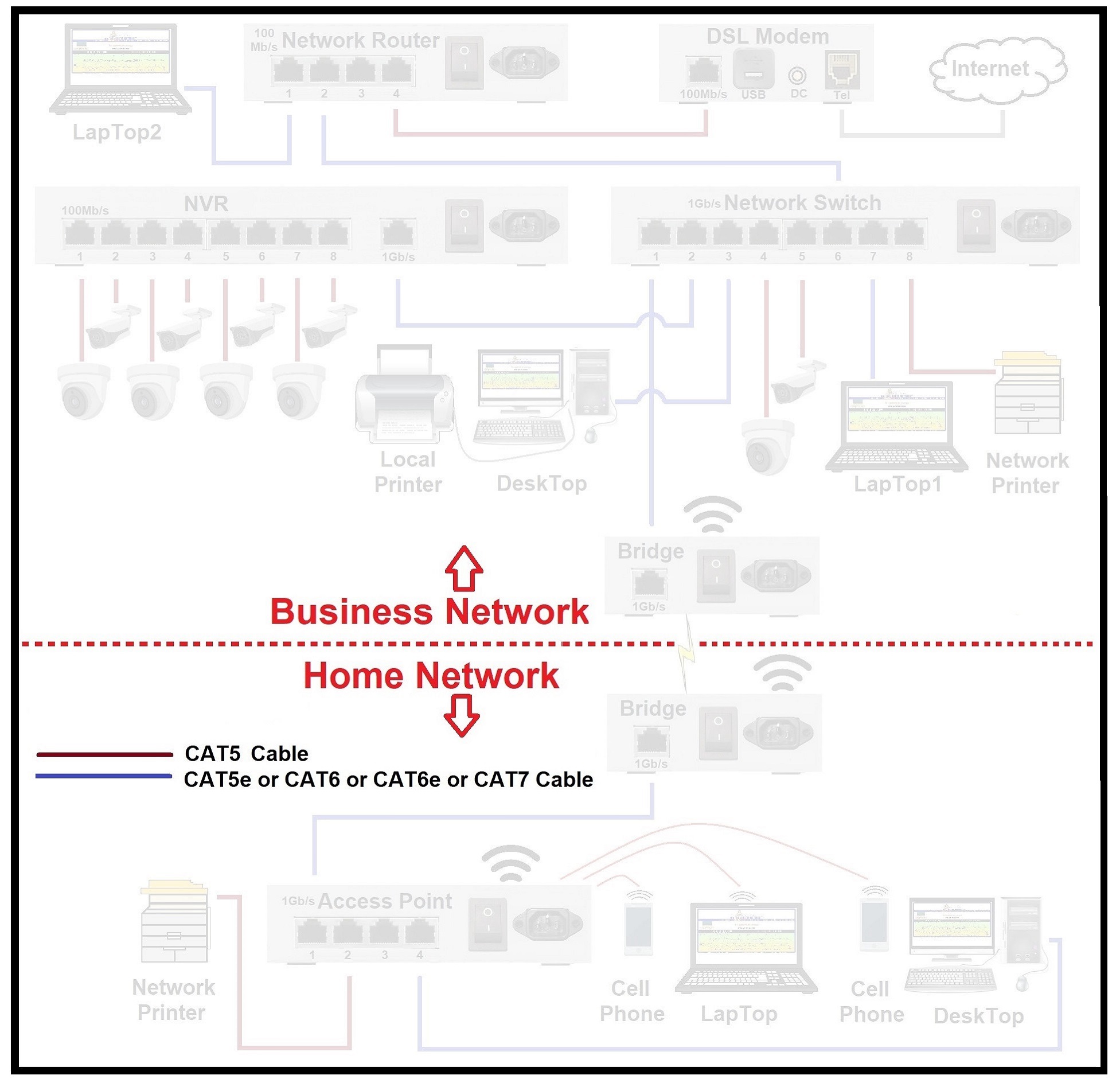
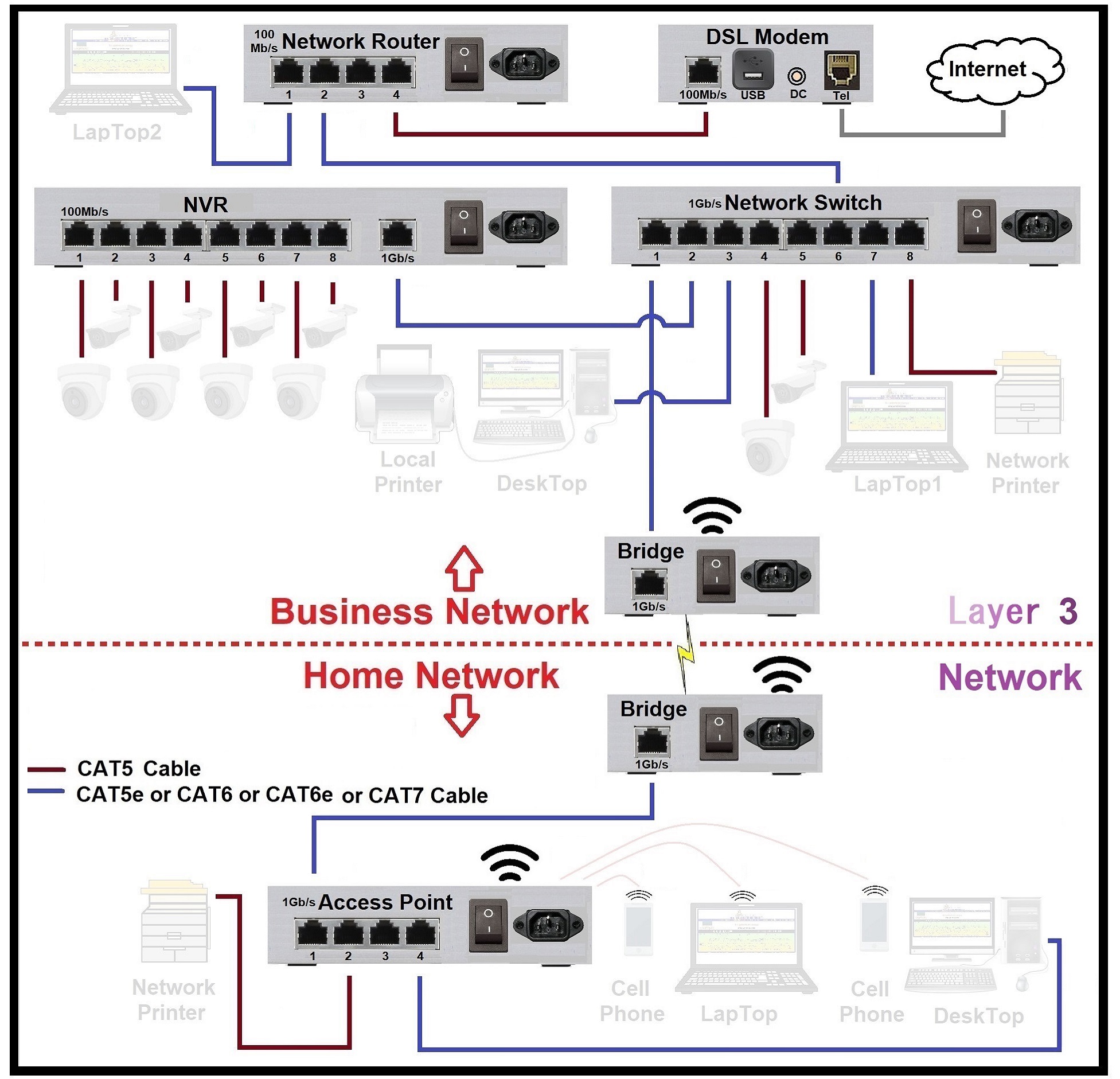
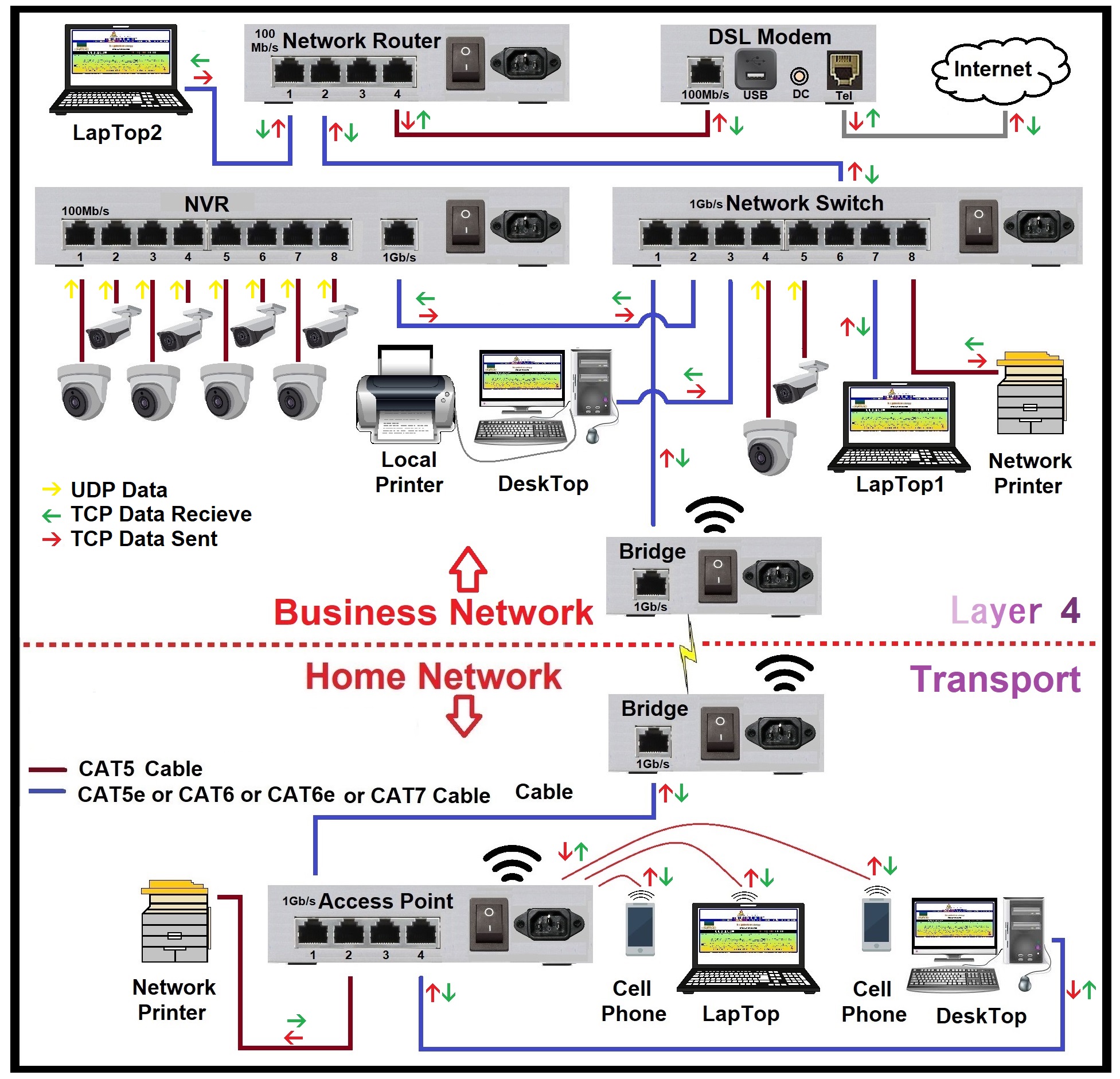
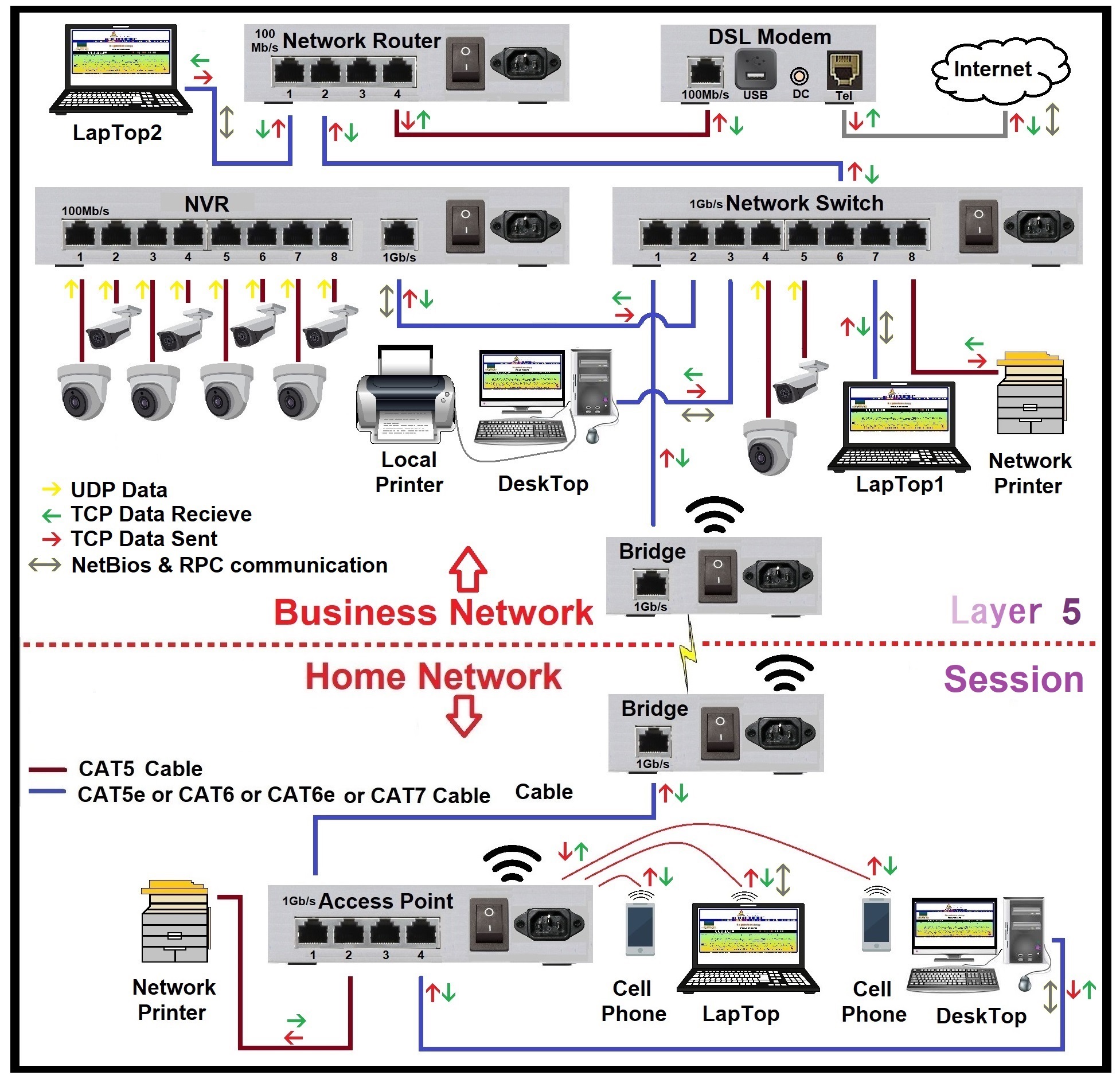
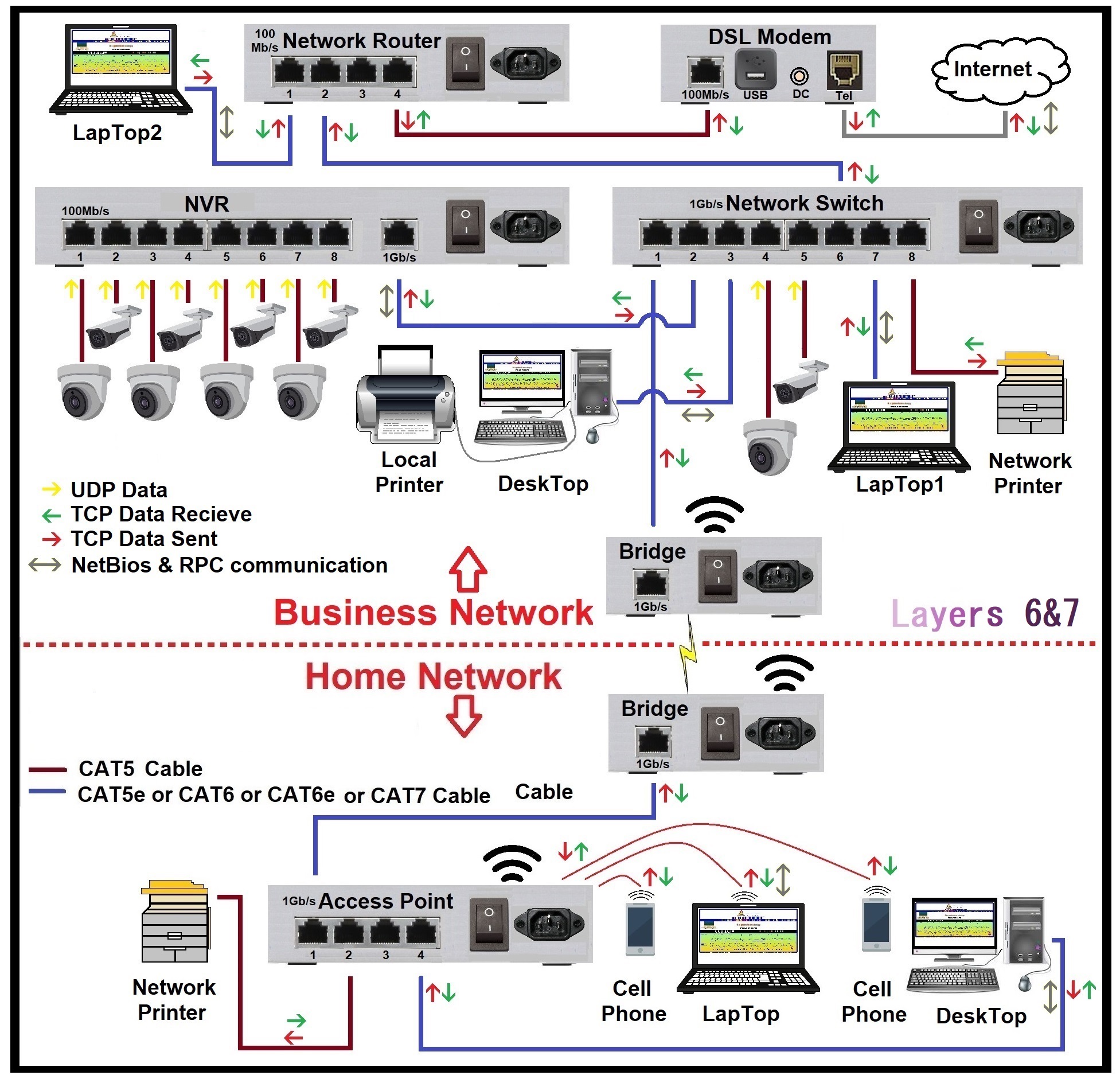
Layer 5 – Session Layer
This is the layer where NetBIOS and RCP communications between applications occur. (NetBIOS) is a program that allows applications on different computers to communicate within a local area network (LAN).)
RCP is basically a protocol that determines where the bottle neck in traffic of the data communications is in a network.
Layer 4 – Transport Layer
TCP and UTP data is transported in this Layer.
TCP works with the Internet Protocol (IP), which defines how computers send packets of data to each other. UDP is used to send short messages called datagrams but overall, it is an unreliable, connectionless protocol and is normally used with video streaming such as cameras.
Layer 3 – Network Layer
This is the layer where routing occurs.
Packets can leave the local network and be re-transmitted on other networks. Routers perform this function.
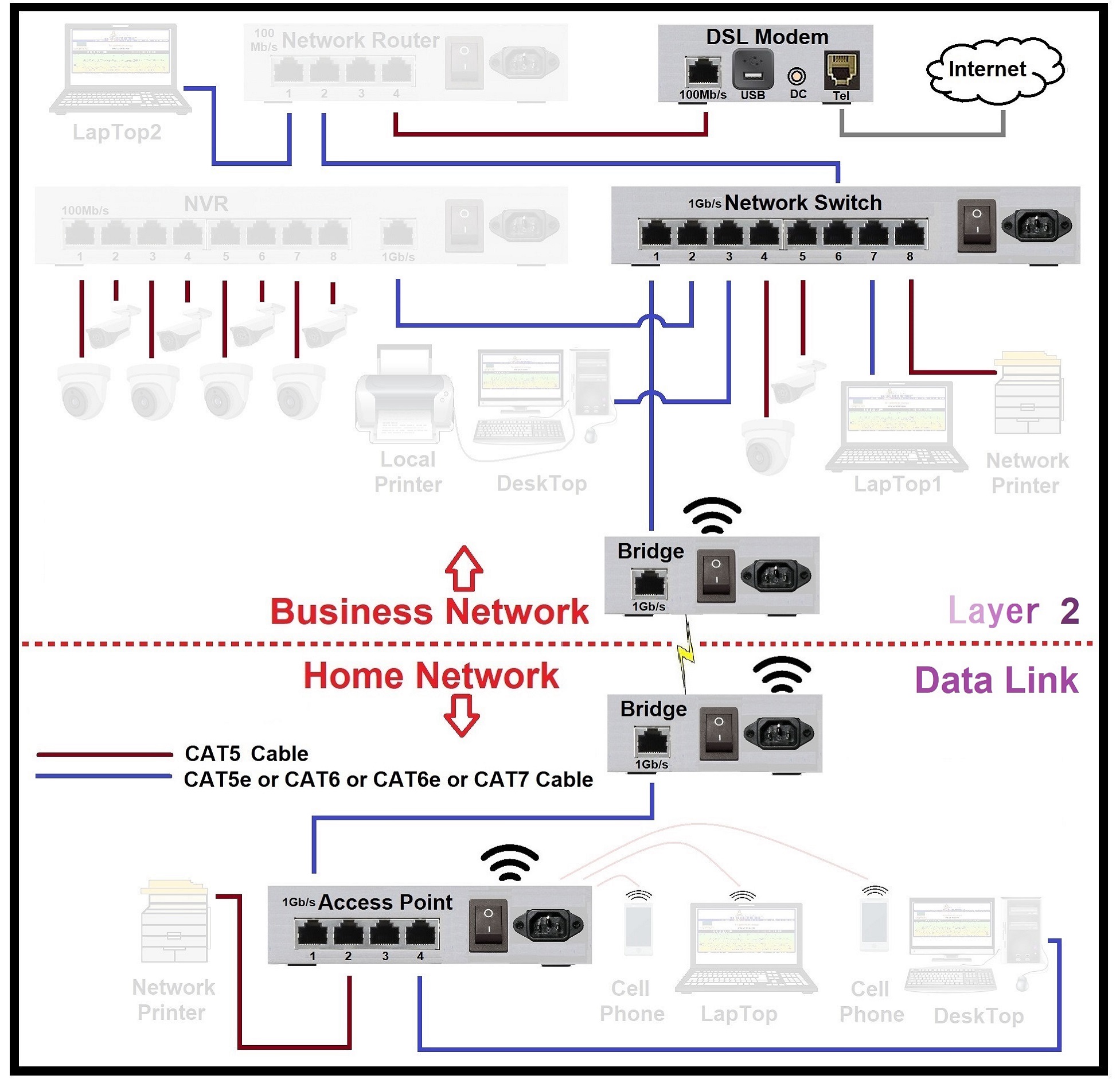
Layer 2 – Data Link Layer
Devices such as bridges, switches and Access Points form part of the Data Link Layer.
Basically it is equipment that has unique Media Access Control (MAC) addresses.
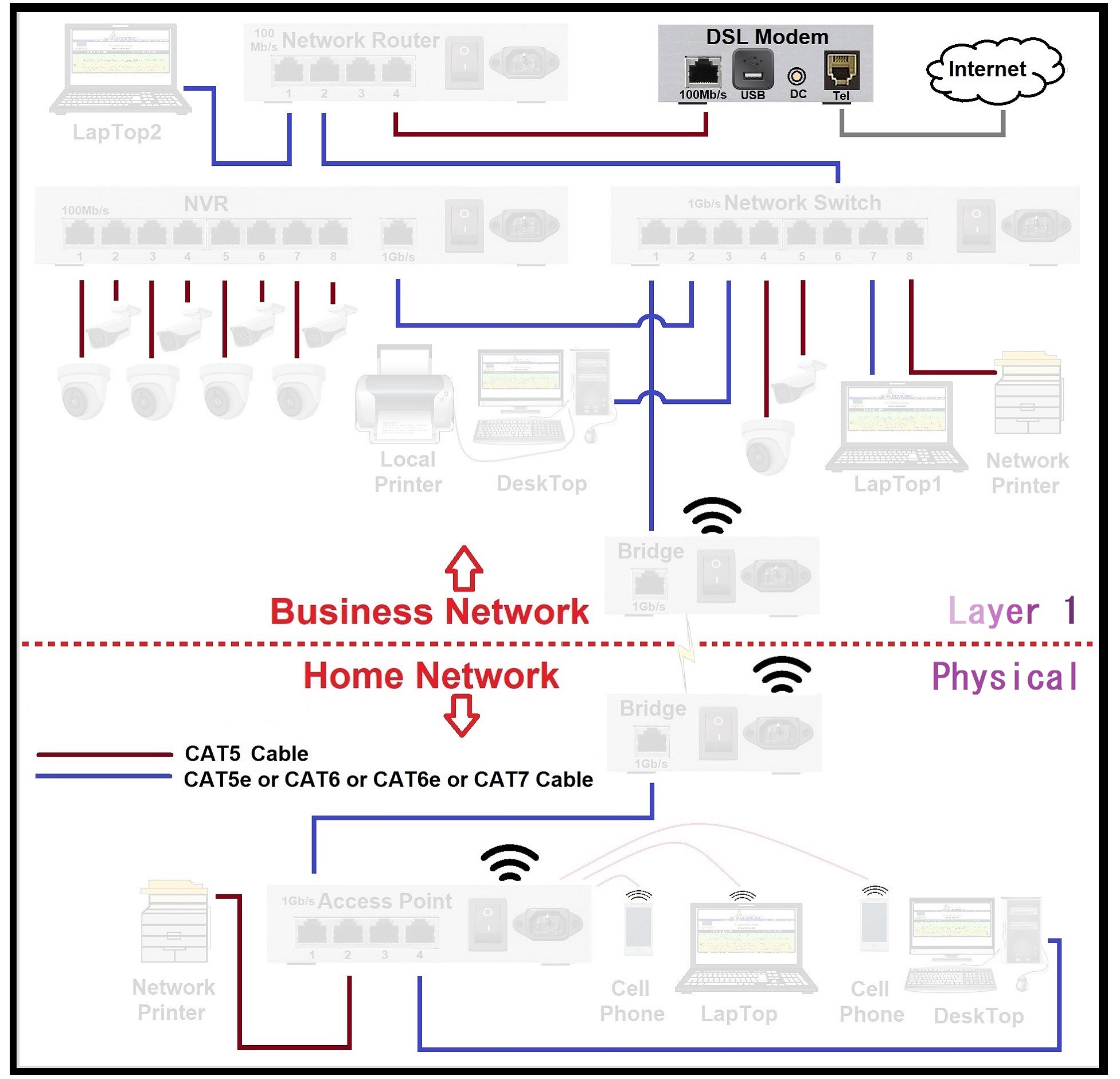
Layer 1 – Physical Layer
It consist of all cabling and radio-waves, or any other medium to transmit signals.
This foundation is required before anything else can be implemented. Note, the modem to the internet is also considered to be part of the physical layer.