
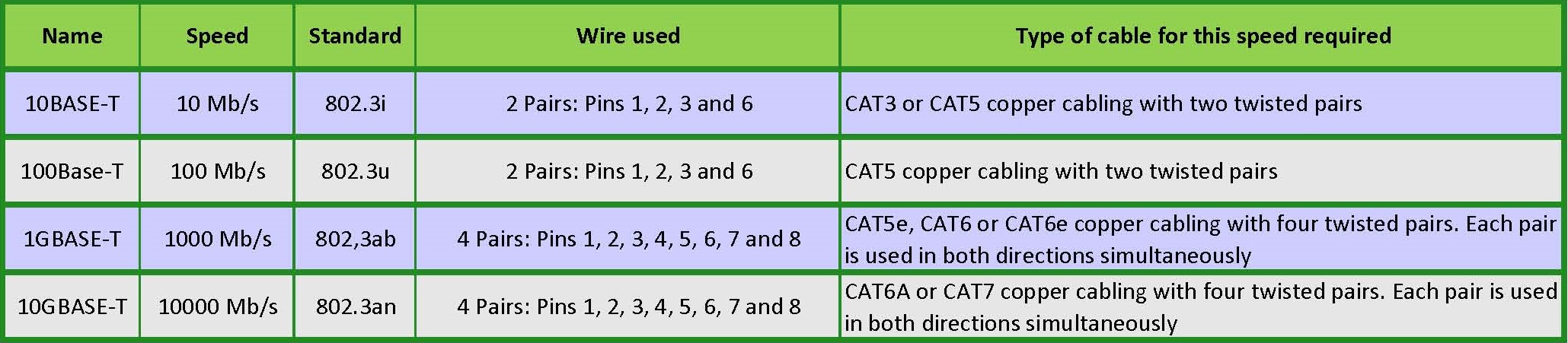
Their are four (4) types of Ethernet speed standards at present (Jan 2021) available. They are…
10BASE-T, 100BASE-T, 1GBASE-T and 10GBASE-T
Below is a table with details, but take note of what is the minimum cable specification for each individual Ethernet standard is.
Mb = Mega-bits, MB=Mega-Bytes
(8 Mega Bits = 1 Mega Byte)
Types of standards in Ethernet Network communications wired with Twisted Pair (UTP & STP) cabling
=================More about Twisted Pair (UTP & STP) network cables=================

We have seven (7) commonly used Twisted Pair cables.
That is CAT3, CAT5, CAT5e, CAT6, CAT6e, CAT6A and CAT7
Herewith pictures of their construction properties and appearance as well as short discussion about each cable.==============CAT3 & CAT5 Cables==============
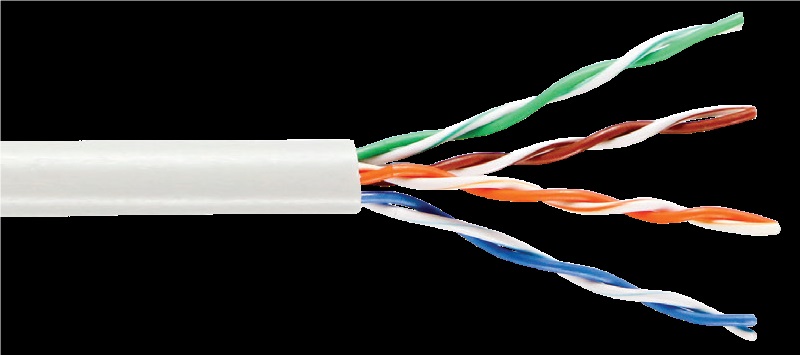
The CAT3 cable is the lowest priced and has the lowest performance characteristics. It is suitable for 10BASE-T networks. It is capable to communicate reliable on 10BASE-T networks up to distance of 100m. The CAT3 cable has no separator between the twisted pairs. This cable is slightly higher priced than CAT3 and its performance characteristics is better than that of CAT3. This cable is suitable for 100BASE-TX networks for a distance up to 100m. This cable has a separator between the twisted pairs.
(Most installers do not consider CAT3 cable to form part of their installations and stick to the minimum performance characteristic of CAT5.)
===========CAT5e, CAT6 & CAT6e Cables===========
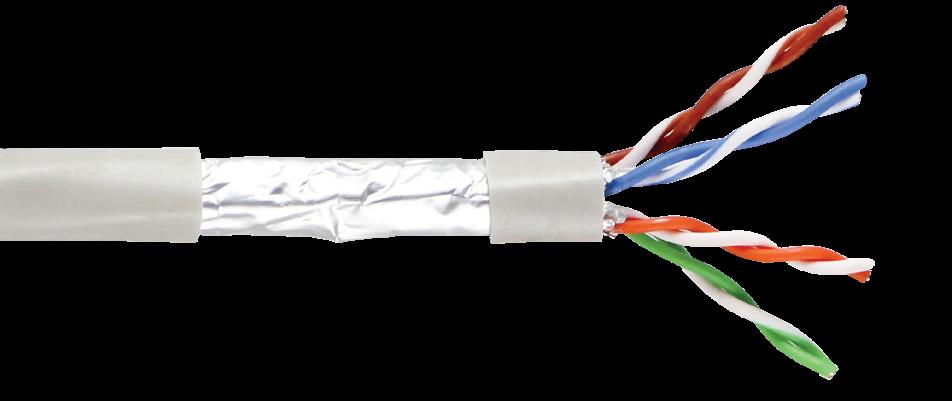
These category cables is shielded and suitable for 1000BASE-T (1GBASE-T) networks up to a distance of 100m. These cables has a separator between the twisted pairs. These cables will also work on 10GBASE-T networks but only for an expected length of between 37m to 55m.
==============CAT6A & CAT7 Cables==============
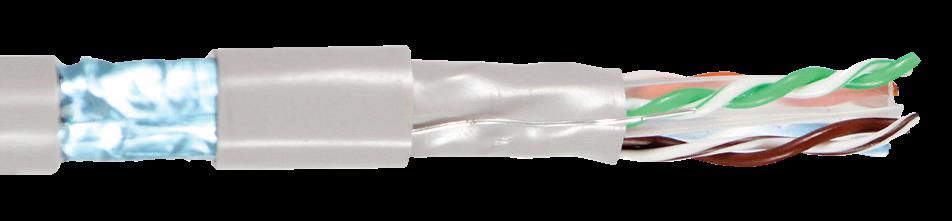
Used in the secondary and tertiary network level for the implementation of services such as 10 Gigabit Ethernet, Gigabit Ethernet, Fast Ethernet, Ethernet etc. The individual foils screen shields the cable from Electromagnetic interference (EMI) and crosstalk – the cable is therefore suitable for use in tight cable channels and near power cables or machinery. It supports 10GBASE-T networks for up to 100m. CAT7 is more expensive that CAT6A
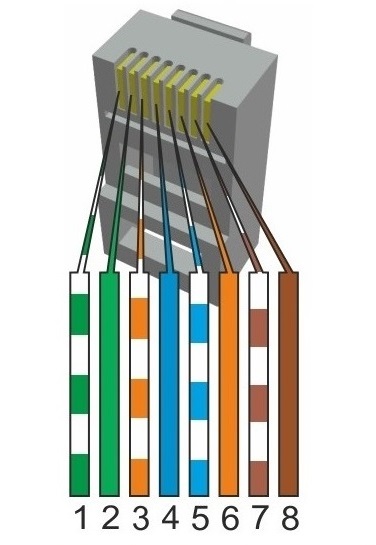
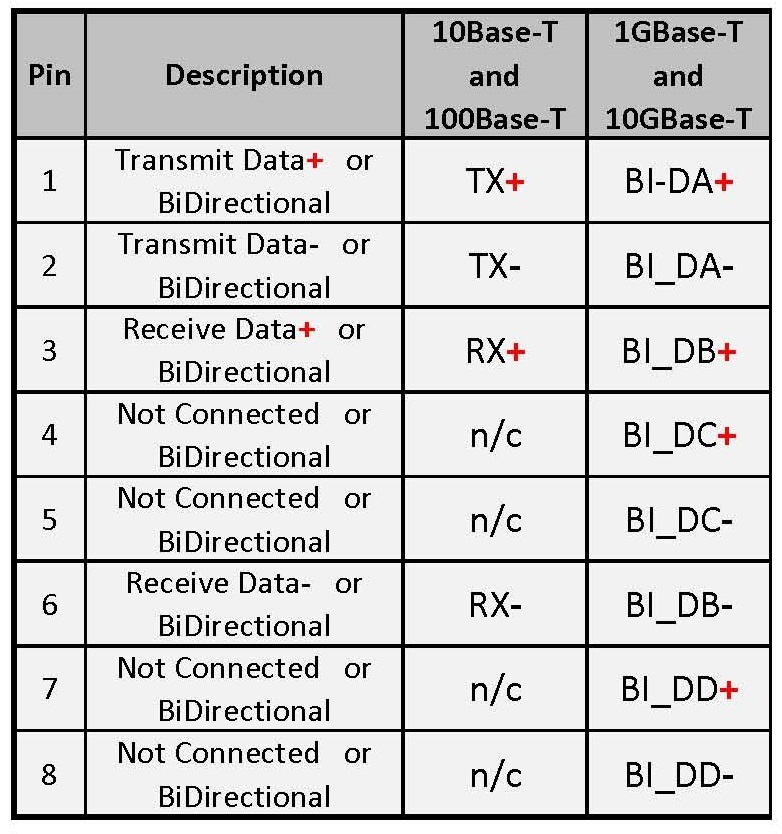
Pins 4 and 5 is for positive and
Pins 7 and 8 is for negative.
That is why one prefer to connect a CCTV camera to an 100Base-T port, because it accommodates the PoE abilities perfectly.
The speed of 100Base-T is sufficient to sent the video data of an 4K IP Camera to a switch or NVR.